Photovoice, Mind Mapping and other data collection methods supportive for youth engagement
By: CogniProbe Solutions Inc.
As an evaluator, it’s important to explore participatory, creative and developmentally appropriate methods to empower young people and generate rich data.
Within the realm of evaluation practice, qualitative data collection provides an opportunity for evaluators to gather information on an individual’s experiences and thoughts; providing a source of rich, descriptive data. Qualitative data collection methods, including the participatory and arts based methods described below, can effectively engage young people in the evaluation process, supporting collaboration and empowerment.
Photovoice – A photograph can relay a large amount of information instantly, and support youth to share their unique experiences and stories. Through this method, evaluators can engage people to create images that reflect their lived experiences within the context of an evaluation and its research questions. The final collection of photos can facilitate dialogue, and knowledge generation about a particular topic, experience or perspective, to reach broad audiences.
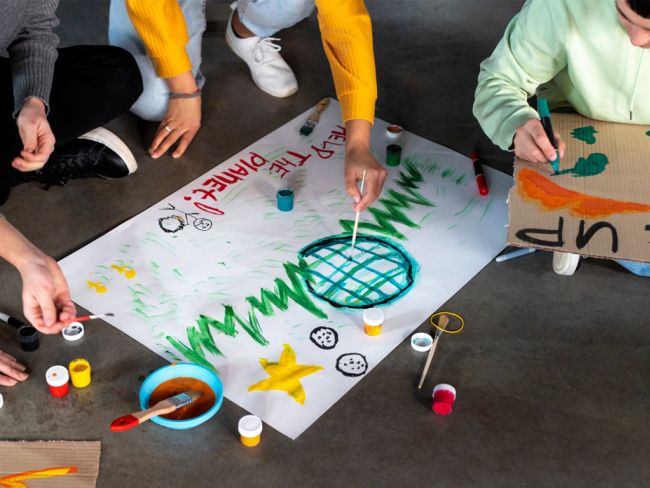
Mind Mapping – Through this method, an evaluator can understand young people’s associations with certain ideas by asking them to write or draw words, images or phrases that relate to the concepts under evaluation. Mind mapping draws upon the unique experiences of youth and actively involves them in the knowledge creation process. Additional mapping techniques like body mapping, involve paper tracing a person on a sheet of paper and undertaking a similar reflective exercise. This approach can be facilitated through workshops and provides an opportunity for self-reflection to identify emotions, feelings and experiences.
Journey Mapping – This method involves having an individual who has engaged with a certain program or system, map their experiences through a chronological ordering, highlighting key touchpoints like interactions with administrators, or receiving services. Through this, individuals can identify successes, barriers, or learnings that can provide knowledge to an evaluator on strengths and areas for program improvement.
Drama based techniques (like Forum Theatre) – Forum Theatre is a type of drama-based technique that engages the audience in an interactive role-playing exercise to develop real-time strategies for dealing with social issues, for example, scenarios around racism. In Forum Theatre workshops, participants can be both actors and audience members. Within the context of an evaluation, a forum theatre production can be used as a tool to create a scenario based on an evaluation’s findings. Participants can engage with the findings, bringing in their own experiences and a facilitator can prompt questions and dialogue around the scenario.
When selecting a participatory or arts-based method to undertake data collection with youth, it’s important to work with youth to co-design and choose the best method to meaningfully engage them. This supports their buy in and helps ensure an appropriate cultural and context fit.